Back Pain From Shoveling Snow: How to Prevent It and Recover Faster
Back pain from shoveling snow is almost always a muscle strain in the lower back, caused by lifting heavy, wet snow with a bent spine, twisting to throw it, and doing it for too long without a break. You can prevent most of it by warming up for 5 to 10 minutes first, pushing snow instead of lifting it, bending at the hips and knees, and keeping every load small and close to your body. If your back already hurts, use cold for the first 48 hours, keep moving gently, switch to heat once the sharp pain settles, and most strains ease within a few days to two weeks.
Here is exactly how to do each of those things, plus the warning signs that mean you should stop shoveling and get checked.
In this article
- Why does shoveling snow hurt your back?
- How should you warm up before shoveling snow?
- What is the right way to shovel snow?
- A before, during, and after checklist
- How do you recover faster from back pain after shoveling?
- When should you see a doctor?
- FAQ
Why does shoveling snow hurt your back?
Shoveling is a heavy, repetitive lifting workout that most people do cold, in a hurry, and only a few times a year. A 17-year national study of US emergency departments found an average of 11,500 snow shovel-related injuries and medical emergencies every year, with acute muscle exertion behind 54% of them and the lower back the most commonly injured area, according to Nationwide Children's Hospital.
Three things do most of the damage:
- The lever effect. A full shovel held at arm's length multiplies the strain on your lower back, because the farther the weight sits from your body, the harder your back muscles work to hold it. Wet, packed snow makes it worse.
- The twist. Throwing snow to the side while your feet stay planted rotates the spine under load, which is the classic way to strain a muscle or irritate a disc.
- Cold, stiff tissue. Muscles and connective tissue are less pliable in the cold, which is a big part of why cold weather makes stiffness worse. Going from the couch straight to heavy lifting gives them no time to adjust.
How should you warm up before shoveling snow?
Treat shoveling like a workout, because it is one. Spend 5 to 10 minutes getting warm indoors before you head out:
- March in place or climb stairs for 2 to 3 minutes to raise your heart rate and body temperature.
- Hip hinges: 10 slow reps, pushing your hips back with a flat back, to rehearse the movement you will use outside.
- Standing side bends and gentle trunk rotations: 10 each way, small range, no bouncing.
- Hamstring and hip flexor stretch: 20 to 30 seconds per side. Tight hamstrings pull on the pelvis and push the work into your lower back.
- Arm circles and shoulder rolls: 10 each direction, since your shoulders and upper back do a lot of the pushing.
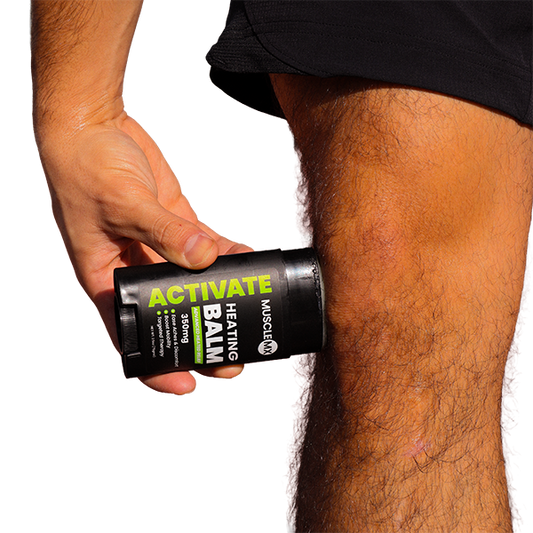
Adding warmth to the area helps too. As we cover in what warming your muscles before you move does, warmer tissue moves more freely, which is exactly what you want before a heavy, repetitive job. A warming balm rubbed into the lower back after your warm-up is an easy way to start that process before you layer up.

A deep warming sensation for a stiff lower back, applied in seconds with a mess-free twist-up stick before you head out.
What is the right way to shovel snow?
Good technique matters more than strength. These are the habits spine specialists repeat every winter:
- Push, don't lift. Use the shovel like a plow and push snow to the edge of the driveway. Lift only when you have to.
- Hinge at the hips and bend your knees. Keep your chest up and your back flat, and let your legs do the lifting.
- Keep the load close. Slide your lower hand down the handle and hold the shovel near your body. The farther away the snow is, the heavier it feels on your back.
- Turn your feet, not your spine. Step or pivot toward where you are dumping the snow. Never throw it over your shoulder or to the side.
- Take small scoops. Half a shovel of wet snow is plenty. Many small loads beat a few heavy ones.
- Switch sides. Alternate your lead hand every few minutes so one side of your back is not doing all the work.
- Use the right tool. A lightweight shovel with a bent or adjustable handle reduces how far you have to bend.
-
Wear boots with real tread. Slips and falls are the second most common shoveling injury, so grip matters as much as form.

Pushing snow like a plow takes most of the load off your lower back compared with lifting and throwing it.
A before, during, and after checklist
Use this as a quick reference next time the forecast calls for snow.
| When | What to do | Why it helps |
|---|---|---|
| Before | 5 to 10 minute warm-up, apply warming balm, drink water, dress in layers | Warm, hydrated muscles handle load better |
| During | Push snow, small scoops, pivot your feet, break every 10 to 15 minutes | Cuts the twisting and fatigue that cause most strains |
| After | Gentle stretches, cooling balm on sore spots, walk around, rehydrate | Eases tightness before it sets in overnight |
| Big storms | Clear a few inches at a time throughout the day | Fresh, light snow weighs far less than packed or slushy snow |
How do you recover faster from back pain after shoveling?
If you finish shoveling with a sore, tight lower back, this is the routine that gets most people moving normally again quickly.
Day 1 to 2: calm it down
- Cold first. For a fresh strain, apply cold for 15 to 20 minutes at a time, a few times a day, to settle the irritation. Our guide on when to use heat or ice for back pain goes deeper on timing.
- Keep moving. Short, easy walks around the house beat bed rest. Staying still lets the muscles stiffen and usually slows recovery.
- Sleep supported. Lie on your side with a pillow between your knees, or on your back with a pillow under your knees.
Day 3 onward: loosen it up
- Switch to heat once the sharp pain eases, to relax lingering tightness.
- Add gentle stretches: knee-to-chest, cat-cow, and child's pose, 2 to 3 rounds of 20 to 30 seconds, never into sharp pain.
- Rebuild gradually. Light core work like glute bridges helps protect your back before the next storm. These steps to speed up muscle strain recovery lay out a full progression.
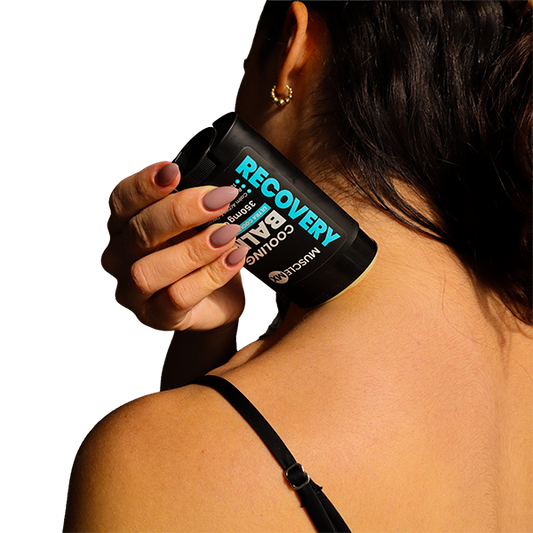
A cooling balm is a convenient way to bring refreshing relief to an overworked back right after you come inside, without wrestling with an ice pack.

A fast, refreshing cooling sensation that soothes an overworked back the moment you come in from the cold.
When should you see a doctor?
Most shoveling strains improve on their own. Mayo Clinic advises getting care urgently for back pain that is severe, getting worse, or not going away. Get checked if you notice:
- Numbness, tingling, or weakness running down one or both legs
- Loss of bladder or bowel control, or numbness in the groin (call 911)
- Pain after a fall on the ice, or pain with a fever
- Pain that is no better after a week, or that wakes you at night
Your heart matters too. Cardiac events caused every death in that national study, and people over 55 were far more likely to have heart symptoms while shoveling. Stop immediately and call 911 if you feel chest pain or pressure, shortness of breath, or pain spreading to your arm or jaw. If you have heart disease or don't exercise regularly, talk to your doctor before you shovel.

A few minutes of gentle stretching after you come inside helps stop tightness from setting in overnight.
Frequently asked questions
Should I use heat or ice for back pain after shoveling snow?
Use ice or cold for the first 24 to 48 hours after a fresh strain, 15 to 20 minutes at a time. After that, switch to heat to relax tight muscles. If your back is just stiff rather than sharply painful, heat is usually the better choice from the start.
How long does back pain from shoveling snow last?
A mild muscle strain usually feels much better within a few days and resolves within one to two weeks. If pain is severe, spreads down your leg, or isn't improving after a week, see a doctor.
Is it better to push or lift snow?
Push whenever you can. Pushing keeps your spine upright and avoids the twisting and throwing motion that causes most lower back strains.
Can shoveling snow cause a herniated disc?
Yes. Heavy lifting with a rounded back, especially combined with twisting, can contribute to a herniated disc. Pain that shoots down a leg with numbness or tingling is a sign to get checked rather than wait it out.
Should I stretch before or after shoveling snow?
Both. Do a short, active warm-up with gentle movement before you start, and save longer, held stretches for after you finish, when your muscles are warm.
Warm up before. Cool down after.
The Heating & Cooling Balm Bundle pairs Activate and Recovery, so your back is covered on both ends of every snow day.
Get the Bundle for $61.99 →