Full-Day Muscle Recovery Routine: What to Do Morning, Afternoon, and Night
A full-day muscle recovery routine spreads recovery across all three parts of your day instead of cramming it into ten minutes after training. In the morning you rehydrate, warm your tissue, and move through a short mobility flow before you load anything. In the afternoon you break up sitting, hydrate steadily, and time your hardest effort for when strength peaks. At night you eat protein, wind down, and protect seven to nine hours of sleep, which is when the actual repair happens. Most muscle groups need 48 to 72 hours to fully recover after a hard session, and what you do in the hours between decides whether that window feels like 48 or closer to 72.
In this article
- Why a full-day routine beats a post-workout routine
- What should you do in the morning?
- How do you protect recovery during the afternoon?
- What should your evening and night routine look like?
- The full-day recovery routine at a glance
- How long before you feel a difference?
- FAQ
Why does a full-day recovery routine beat a post-workout routine?
Because recovery is not an event. Muscle repair runs on a 24-hour cycle driven by sleep, hydration, blood flow, and protein availability, and a foam roller for eight minutes after your last set touches almost none of that. Sleep is the biggest single lever: your body releases most of its growth hormone during deep sleep, and research summarized by the University of Maryland Medical System puts the target at seven to nine hours a night for meaningful repair.
The second reason is that soreness is cumulative. Eight hours of sitting undoes a good warm-up. Dehydration through a workday measurably lowers strength and endurance before you ever get to the gym. A full-day routine is really about removing the things that quietly extend your recovery window, which is the same logic behind daily habits that stop soreness before it starts.

Recovery starts before your first rep, not after your last one.
What should you do in the morning to recover?
You wake up dehydrated, stiff, and cold. Your discs are fluid-swollen from lying flat and your tissue temperature is at its lowest point of the day. It is the same mechanism as how daily positions create stiffness over a workday, compressed into one night. The morning block is about reversing all three before you ask your body to do anything demanding.
Step 1: Rehydrate before caffeine. Drink 16 to 20 oz of water in the first 30 minutes. You lose fluid through breath and sweat overnight, and starting the day behind means playing catch-up until lunch.
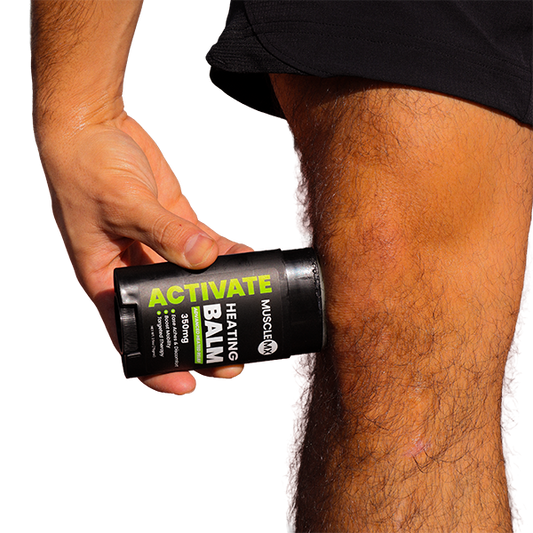
Step 2: Warm the tissue you plan to use. Warm muscle is more elastic, and elastic muscle tolerates load better. A hot shower works. So does a warming topical on the areas that always talk to you first, usually the lower back, neck, and knees. This is the same principle behind warming your muscles before you move.

A warming CBD balm for stiff necks, backs, and knees. Rub it in before your mobility flow so you are moving warm tissue, not cold tissue.
Step 3: Five minutes of dynamic mobility. Not static holds. Hip circles, cat-cow, thoracic rotations, leg swings, and arm circles. Ten reps each. The goal is to move every major joint through its full range while blood flow is climbing, which is exactly what a morning stretch routine that actually works is built around.
Step 4: Eat protein within 90 minutes of waking. Aim for 25 to 40 g. Overnight your body has been breaking down tissue for fuel, and an early protein dose flips you back toward building. If appetite rather than time is the obstacle, that same front-loading tactic is central to protecting muscle while losing weight on a GLP-1.
How do you protect recovery during the afternoon?
The afternoon is where most people lose recovery without noticing. Sitting for six to eight hours shortens hip flexors, stiffens the thoracic spine, and reduces circulation to the muscles you trained yesterday. Three habits fix most of it.
Move every 45 to 60 minutes. Stand, walk 2 minutes, roll your shoulders. It does not need to be a workout. It needs to be frequent. If your neck and traps are the first thing to seize up at a desk, the fixes in our guide to relieving neck and shoulder tension take under five minutes.
Hydrate on a schedule, not on thirst. Thirst lags behind actual fluid loss. A rough target is half your bodyweight in pounds, converted to ounces of water, spread across the day. Add electrolytes if you sweat heavily or train in heat.
Train in the window where your body is strongest. Core body temperature, muscle strength, and power output all peak in the late afternoon and early evening, roughly between 2:30 pm and 8:30 pm, according to Mayo Clinic Health System. If your schedule allows it, that is the cheapest performance upgrade available. If it does not, a longer warm-up closes most of the gap.
Support recovery from the inside. Topicals handle the surface. What you take daily handles the rest: creatine monohydrate for strength and recovery between sessions, L-theanine for calm focus without a crash, and vitamins D3 and K2 for bone and muscle function.

Creatine monohydrate, L-theanine, and vitamins D3 + K2 in one gummy. Three flavors, no shaker bottle required.

Frequency beats duration. Two minutes every hour outperforms one long stretch session.
What should your evening and night recovery routine look like?
Everything before this point sets up the block that does the real work. Your evening has four jobs.
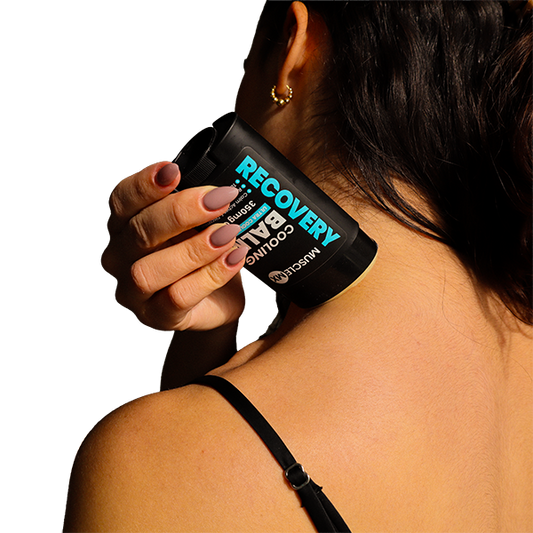
Cool down and cool off. After training, five minutes of easy walking plus static stretching brings your heart rate down and starts clearing metabolic waste. Then apply a cooling topical to the areas you worked hardest. Cooling sensation is what most people reach for when muscles are hot, tight, and complaining, and it pairs well with the other tactics in our guide to getting rid of muscle soreness.

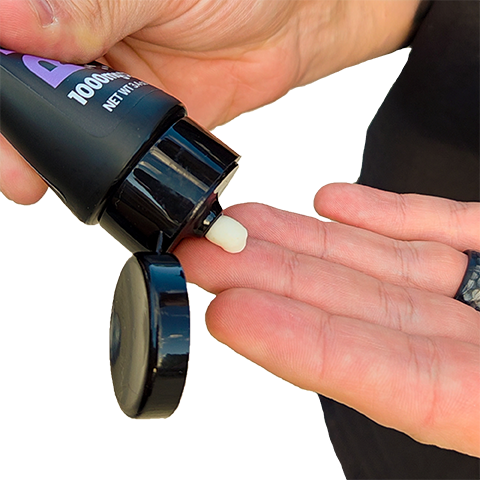
A cooling CBD balm for overworked muscles and joints after a long day or a hard session. Standard 350 mg or extra strength 1000 mg.
Eat a real meal within two hours of training. Protein for repair, carbohydrate to refill glycogen. Skipping this and going to bed underfed is one of the fastest ways to wake up more sore than you should be.
Wind down deliberately. Drop the room to around 65 to 68 F, dim the lights an hour before bed, and get screens out of the last 30 minutes. Deep sleep is when growth hormone release and inflammation clearance happen, and a single night of poor sleep can add 12 to 24 hours to your recovery time. If discomfort is the thing keeping you up in the first place, it helps to understand why pain feels worse at night.
Protect seven to nine hours. This is the non-negotiable one. No supplement, balm, or modality compensates for chronically short sleep. If you only fix one thing on this entire page, fix this.
The full-day recovery routine at a glance
| Time | Do this | Time needed | Why it matters |
|---|---|---|---|
| Wake | 16 to 20 oz water before caffeine | 1 min | Reverses overnight fluid loss |
| Morning | Warming balm plus 5 min dynamic mobility | 7 min | Warm tissue tolerates load better |
| Morning | 25 to 40 g protein within 90 min of waking | 10 min | Shifts you from breakdown to repair |
| Afternoon | Stand and walk every 45 to 60 min | 2 min each | Stops sitting from undoing your warm-up |
| 2:30 to 8:30 pm | Train in your strength peak if you can | n/a | Strength and power output are highest |
| Post-workout | Cool down, stretch, cooling balm | 10 min | Brings heart rate down, soothes worked areas |
| Within 2 hrs | Protein and carbohydrate meal | 30 min | Refills glycogen, supplies repair material |
| Night | 7 to 9 hours of sleep, cool dark room | 7 to 9 hrs | Where the actual repair happens |
How long before a full-day recovery routine makes a difference?
Most people notice easier mornings within 5 to 7 days, mainly from the hydration and mobility changes. Reduced day-to-day soreness usually shows up in weeks 2 to 3, once sleep and post-training nutrition have been consistent long enough to matter. Genuine improvements in how fast you bounce back between hard sessions take 4 to 6 weeks.
Recovery time also shifts with age. Under 30, 24 to 48 hours per muscle group is typical. In your 40s and 50s, expect 48 to 72 hours, and it is worth reading up on why recovery slows after 50 before you assume your training program is the problem. Past 60, four days or more after intense training is normal, which makes the daily habits more important, not less. That shift is really the whole story behind healthspan versus lifespan: the habits that speed recovery in your 30s are what keep you moving independently in your 60s and beyond.
Frequently asked questions
How long does it take for muscles to recover after a workout?
Most muscle groups need 48 to 72 hours after a high-intensity session. Smaller muscles like biceps, triceps, and calves often recover in about 48 hours. Larger groups like quads, hamstrings, and back need the full 72, especially after heavy eccentric work such as slow lowering phases.
Should I use heat or cold for muscle recovery?
Use heat before activity and cold after. Warming increases tissue elasticity and blood flow, which is what you want going into movement. Cooling is better suited to muscles that already feel hot, tight, and overworked. Many people keep both on hand and switch based on what the day calls for.
Is it bad to work out on sore muscles?
Light activity on sore muscles is generally fine and often helps, since gentle movement increases circulation to the area. Training the same muscle group hard again before it has recovered is what causes problems. If soreness is sharp rather than dull, or is not improving after 72 hours, back off and get it checked.
Does sleep really affect muscle recovery that much?
Yes. Most growth hormone release happens during deep sleep, and that is when inflammation clearance and tissue repair are most active. Seven to nine hours is the working target, and even one poor night can add 12 to 24 hours to your recovery time.
Can I do this routine on rest days?
Yes, and rest days are where it pays off most. Keep the hydration, morning mobility, movement breaks, protein, and sleep. Drop the training block and the post-workout cooldown. That is roughly 25 minutes across the whole day.
One balm for the morning. One for the night.
The Heating & Cooling Bundle pairs Activate for warming up with Recovery for cooling down, so both ends of your day are covered.
Shop the Bundle from $59 →Free shipping on qualifying orders. Third-party tested, made in the USA.
This article is for general information and is not medical advice. Muscle MX products are not intended to diagnose, treat, cure, or prevent any disease. Talk to a healthcare professional about persistent or worsening pain.