How to Manage Muscle Soreness Before It Drains Your Energy and Mood
Muscle soreness drains your energy and flattens your mood because your body diverts resources to inflammation and repair, sleep quality drops, and the discomfort itself triggers a stress response. The fix is not "push through it." It is a short, repeatable routine: move gently, cool the muscle, hydrate, and protect your sleep, so your body can repair without dragging your whole day down with it.
In this article
- Why does muscle soreness affect energy and mood?
- Step 1: Move first, rest second
- Step 2: Cool the muscle within the first few hours
- Step 3: Refuel and rehydrate on purpose
- Step 4: Protect your sleep, not just your muscles
- Step 5: Reset your mindset around soreness
- Common mistakes that make soreness worse
- FAQ
Why does muscle soreness affect energy and mood?
Delayed onset muscle soreness, or DOMS, usually peaks 24 to 72 hours after a hard workout. During that window, your body is running a small-scale repair operation: it sends immune cells to the damaged muscle fibers, increases blood flow to the area, and triggers inflammation so the tissue can rebuild stronger. That repair work costs energy, and your body pulls it from the same reserves you would normally use to feel alert and motivated.
On top of that, soreness makes everyday movement feel harder than it should. Standing up, climbing stairs, or reaching for a coffee mug suddenly take more effort, and your brain registers that extra effort as fatigue. Add in disrupted sleep (sore muscles make it harder to get comfortable at night) and you have a clear, physical reason for the low mood and short temper that often show up the day after leg day.
According to the Cleveland Clinic, DOMS is a normal response to unfamiliar or high-intensity exercise and typically resolves within 3 to 5 days, but the way you manage that window determines whether it derails your week or just slows you down for a day. If you want a deeper breakdown, we cover proven methods for muscle soreness in a separate guide.

Step 1: Move first, rest second
The instinct when you are sore is to stay still. Do the opposite, in small doses. Light movement, like a 10 to 15 minute walk or an easy bike ride, increases blood flow to the sore muscle and helps clear out some of the metabolic byproducts that contribute to stiffness. You are not trying to train again. You are trying to keep the area from seizing up.
If you skip movement entirely, soreness tends to feel worse the next day, not better, because the muscle stiffens further and your range of motion drops.
Step 2: Cool the muscle within the first few hours
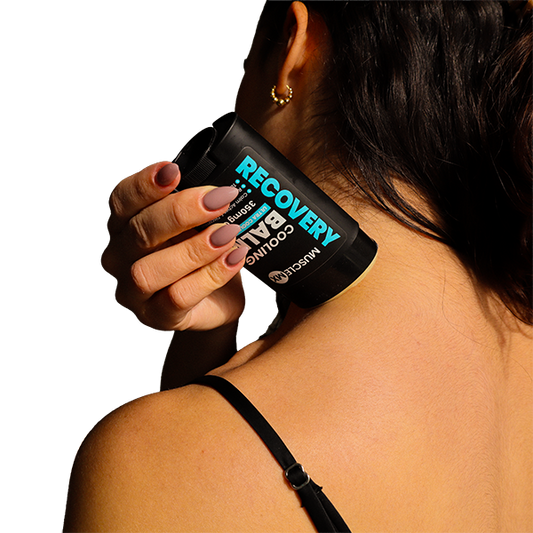
Cooling a sore muscle constricts blood vessels at the surface, calms the area, and can take the edge off the ache enough that you stop guarding the muscle (which causes its own tension and fatigue elsewhere in the body). This is where a topical cooling balm earns its place in a recovery routine: it is faster to apply than an ice pack, does not require sitting still for 20 minutes, and you can use it on the spots a bag of ice never reaches well, like the lower back or shoulders.

A targeted cooling formula in 350 mg standard strength for everyday soreness or 1000 mg extra strength for deeper recovery, easy to rub into sore spots in seconds.
Pair this with a simple rule: cool first, warm later. Cooling helps calm acute soreness right after activity, while a warming balm is better suited to loosening up stiff, tired muscles before you move again the next day. Not sure whether heat or cold is the better call for your situation? We break it down in detail.

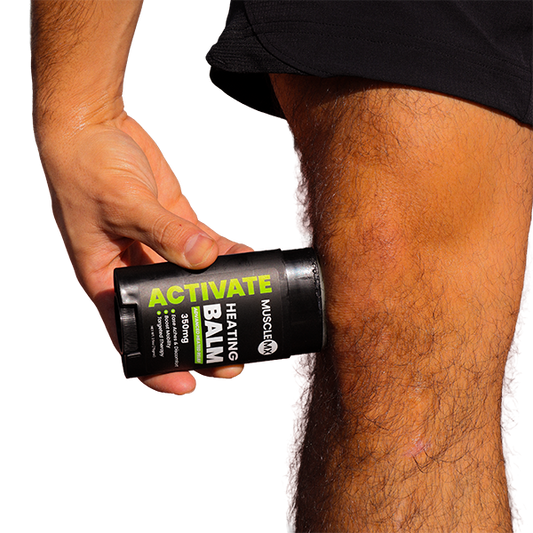
A warming formula that helps loosen stiff, sore muscles before activity, available in the same 350 mg and 1000 mg strengths as the Recovery Balm.
Step 3: Refuel and rehydrate on purpose
Muscle repair runs on protein and water. A meal with 20 to 30 grams of protein within a couple of hours of training gives your body the raw material it needs, and proper hydration helps transport nutrients to the muscle and flush out waste. Being even mildly dehydrated makes soreness feel sharper and makes you feel more tired, which is part of why a hard workout followed by a few too many coffees and not enough water can leave you feeling wrecked by mid-afternoon. Fitting those habits into a full-day muscle recovery routine makes them easier to remember.
Step 4: Protect your sleep, not just your muscles
Most of your muscle repair happens during deep sleep, when growth hormone release peaks. Soreness that keeps you tossing and turning cuts into that window, which means you wake up less recovered, both physically and mentally. The Sleep Foundation notes that poor sleep is linked to slower muscle repair and a lower pain tolerance the next day, which can make ordinary soreness feel more intense than it actually is.
A simple fix: apply a cooling balm to the most affected area 15 to 20 minutes before bed so you are not lying awake fighting the ache, and keep your room on the cooler side, which generally supports deeper sleep. This works best as part of a daily recovery routine rather than something you only think about after a hard session. It is also worth knowing that your skin repairs overnight too, on exactly the same schedule.
Step 5: Reset your mindset around soreness
Soreness is not failure and it is not a sign you are out of shape. It is evidence that a muscle was challenged and is adapting. Reframing it this way matters more than it sounds, because dreading soreness (or treating it as a setback) adds a layer of mental stress on top of the physical fatigue, and that combination is what really tanks your mood and motivation.
Try this instead: name the soreness out loud as a sign of progress, plan one small recovery action for the day (a walk, a stretch, applying a balm), and give yourself permission to move slower without giving up on the day entirely. If the soreness is also costing you sleep, that is the pain-stress-sleep loop at work, and it can be broken at either end.
| Symptom | Why it affects energy or mood | Quick fix |
|---|---|---|
| Stiffness on waking | Extra effort to move reads to your brain as fatigue | Short walk, then a cooling balm before showering |
| Trouble falling asleep | Less deep sleep means less repair and lower pain tolerance | Apply balm 15 to 20 minutes before bed |
| Irritability or low motivation | Energy is being diverted to inflammation and repair | Protein-rich meal, water, and one easy win for the day |
Common mistakes that make soreness worse
- Going fully sedentary. Total rest often extends soreness rather than shortening it.
- Skipping water because you "didn't sweat that much." Strength sessions dehydrate you too.
- Stacking another hard session on top. Training the same muscle group again before it has recovered adds fatigue without adding benefit.
- Ignoring sleep. Powering through on 5 hours of sleep undoes a lot of the recovery work you did during the day.
Frequently asked questions
Why does muscle soreness make me feel so tired?
Your body redirects energy toward repairing the muscle and managing inflammation, and the extra effort it takes to move around when you are sore registers in your brain as fatigue, which is why an ordinary day can feel exhausting after a hard workout.
Can muscle soreness affect your mood?
Yes. Pain and stiffness raise stress hormones, disrupt sleep, and make routine tasks harder, and that combination commonly shows up as irritability, low motivation, or a flatter mood until the soreness eases.
How long does DOMS usually last?
Delayed onset muscle soreness typically peaks 24 to 72 hours after exercise and resolves within 3 to 5 days, though intensity and timing vary by person and workout.
Should I work out again if I am still sore?
Light activity that does not target the sore muscle group, like a walk or a gentle mobility session, is usually fine and can help. Avoid another high-intensity session on the same muscles until the soreness has noticeably eased.
Does a cooling balm actually help with soreness?
A cooling balm calms the area at the surface and can ease the ache enough to reduce the muscle guarding and stiffness that contribute to fatigue, making it a fast, convenient option alongside movement, hydration, and sleep.
What is the difference between a cooling balm and a warming balm?
A cooling balm is generally better suited right after activity or for acute soreness, while a warming balm is better for loosening stiff muscles before you move again, such as the next morning.
Don't let soreness run your day
Keep the Recovery Cooling Balm within reach for the moments soreness hits hardest.
Shop Recovery Cooling Balm →Free shipping available. See musclemx.com for current offers and guarantee details.