Holiday Pain Relief: 9 Tips for Travel Days and Long Hours on Your Feet
The best holiday pain relief comes down to three habits: move every hour you are sitting in a plane or car, wear supportive shoes for every hour you are standing, and treat stiff muscles with warmth and tired feet and legs with cooling before soreness builds. Holiday travel and long days in the kitchen or at the mall put your body through two opposite stresses: too much sitting, then too much standing. The 9 tips below cover both, from the airport gate to the last dish washed.
In this article
- Why does holiday travel make your body hurt?
- How do you avoid pain on long flights and drives? (Tips 1 to 4)
- How do you stop your feet and back hurting from standing all day? (Tips 5 to 7)
- What should you do at night to recover? (Tips 8 and 9)
- Quick guide: which pain, which fix
- FAQ
Why does holiday travel make your body hurt?
Most holiday aches are not injuries. They are the result of holding one position for too long. Sitting for hours tightens your hip flexors, rounds your upper back, and slows circulation in your lower legs, which is why your back aches and your ankles swell after a long flight. Then you arrive and spend 8 hours on your feet cooking, shopping, or chasing kids, and your feet, calves, and lower back take the load instead.
Add heavy luggage, unfamiliar beds, extra salt and alcohol, and less sleep than usual, and it is easy to see why so many people feel worn out by December 26th. The good news: small, repeatable habits fix most of it.
How do you avoid pain on long flights and drives?
1. Get up and move at least once an hour
Sitting still is the biggest driver of travel stiffness. According to the CDC, travel lasting 4 hours or more raises the risk of blood clots, and moving your legs regularly is one of the simplest ways to reduce it. On a plane, choose an aisle seat and walk the aisle when the seatbelt sign is off. On a road trip, plan a stop every 1 to 2 hours, even if it is just 5 minutes of walking around a gas station.
2. Do seat stretches between breaks
When you cannot stand, keep your muscles working where you sit. Try this 2-minute routine every 30 minutes:
- Ankle pumps: lift your toes, then your heels, 15 times each.
- Ankle circles: 10 in each direction, per foot.
- Shoulder rolls: 10 backward to open up a rounded upper back.
- Seated figure-4: ankle over the opposite knee, sit tall, hold 20 seconds per side to ease tight hips.
- Chin tucks: gently draw your chin back 10 times to reset your neck.
If your neck and shoulders are the first to complain, these steps to relieve neck and shoulder tension work well in a seat too.

Two minutes of seat stretches every half hour keeps hips and lower back from locking up mid-flight.
3. Support your lower back and neck
Most car and plane seats let your lower back slump. Roll up a sweater or small travel pillow and place it behind the small of your back to keep its natural curve. Use a neck pillow on flights longer than 2 hours, and on road trips adjust the headrest so it sits level with the middle of your head, not your neck.
4. Lift and carry luggage the smart way
Overhead bins and car trunks cause a lot of holiday back strain. Bend your knees, keep the bag close to your body, and avoid twisting while you lift. Lift onto the seat first, then up into the bin. Use rolling bags and switch hands on long walks through the terminal so one shoulder does not carry the whole trip.
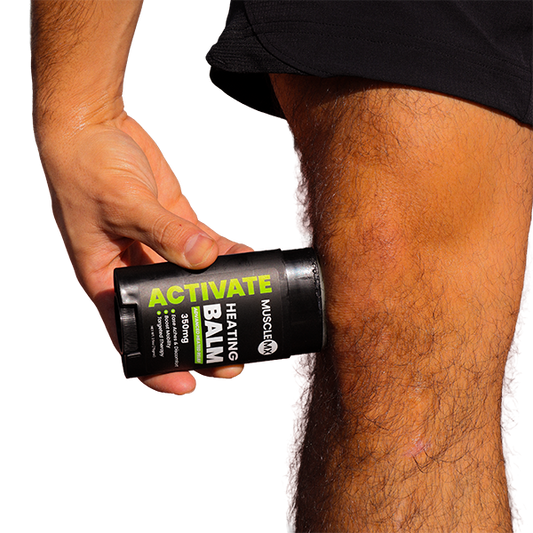
Arrived stiff anyway? Winter travel adds to it, because cold weather makes stiffness worse. A warming balm on your lower back or neck before you start unpacking helps tight muscles loosen up.

A deep warming sensation for a tight back, neck, or hips after hours in a seat. Mess-free twist-up stick that fits in your bag.
How do you stop your feet and back hurting from standing all day?
5. Wear supportive shoes, not new ones
Holiday events tempt you into new boots or dress shoes, but stiff, unworn shoes are a fast route to sore arches and blisters. Pick broken-in shoes with arch support and a cushioned sole for shopping days, sightseeing, and kitchen marathons. Cleveland Clinic also recommends cushioned insoles and, for some people, compression socks to reduce leg fatigue from long periods standing.
6. Shift your weight and break up standing time
Standing perfectly still is almost as hard on your body as sitting still. While cooking or waiting in line:
- Rest one foot on a low step or open cabinet ledge, then switch every few minutes.
- Stand on an anti-fatigue mat or folded towel at the counter.
- Do 10 calf raises every 30 minutes to keep blood moving.
- Sit for 5 minutes every hour or so, ideally with your feet up.
We cover more of this balance in sitting all day vs standing all day, which is worth a read if your normal workday leans one way.
7. Drink water and go easy on salt and alcohol
Holiday menus are heavy on salt and alcohol, and travel days are light on water. Both make swelling in your feet and ankles worse and leave muscles feeling tight. Aim for a glass of water with every meal and drink, and carry a refillable bottle through the airport once you are past security.

A mat and a low step to rest one foot on can take a surprising amount of load off your lower back during a long cooking day.
What should you do at night to recover?
8. Elevate your legs for 15 to 20 minutes
After a long day standing or a long travel day, lie on your back with your legs up a wall or propped on pillows above heart level for 15 to 20 minutes. It helps reduce swelling in your feet and ankles and gives your calves and lower back a break. Follow it with a gentle calf stretch against the wall, 30 seconds per side.
9. Cool tired feet and legs, warm tight muscles
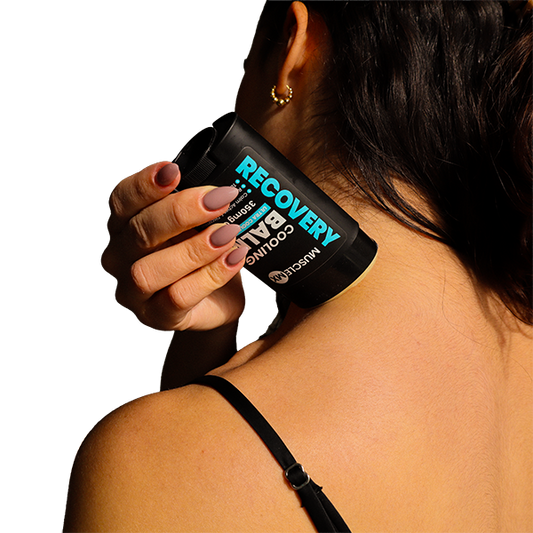
Match the sensation to the problem. Cooling suits feet, calves, and knees that feel hot, heavy, or swollen after hours of standing. Warmth suits muscles that feel tight and stiff, like a lower back after a long drive. Many people use both: warmth in the morning before a busy day, and cooling in the evening when the shoes come off. Our full-day muscle recovery routine walks through how to time each one.

A refreshing cooling sensation for overworked feet, calves, and knees after a long day on your feet. Glide it on, no mess on your hands.
Quick guide: which pain, which fix?
| What you feel | Likely cause | Quick fix | Warm or cool? |
|---|---|---|---|
| Stiff lower back after a flight or drive | Hours seated, slumped posture | Lumbar support, walk breaks, figure-4 stretch | Warm |
| Tight neck and shoulders | Sleeping upright, heavy bags | Neck pillow, chin tucks, shoulder rolls | Warm |
| Swollen feet and ankles | Sitting still, salt, low water | Ankle pumps, water, legs up the wall | Cool |
| Sore arches and heels | Long standing, unsupportive shoes | Broken-in shoes, insoles, mat at the counter | Cool |
| Heavy, achy calves | Standing or sitting in one spot | Calf raises, wall stretch, compression socks | Cool |

Fifteen minutes with your legs up is one of the easiest ways to end a long holiday day feeling lighter.
Frequently asked questions
How do I stop my feet from hurting when I stand all day?
Wear broken-in shoes with arch support, stand on a cushioned mat where you can, shift your weight often, and sit for a few minutes every hour. At night, elevate your legs for 15 to 20 minutes and use a cooling balm on sore arches and calves.
Is heat or cold better for sore feet after standing?
Cooling usually feels better for feet and calves that are hot, swollen, or heavy after a long day. Warmth is better for muscles that feel tight and stiff, like a lower back after travel.
How often should you get up on a long flight?
Aim to walk the aisle about once an hour when it is safe to do so, and do ankle pumps and seat stretches in between. The CDC notes that travel of 4 hours or more raises blood clot risk, so regular movement matters most on long-haul trips.
Why does my back hurt after a long car ride?
Car seats often let your lower back round for hours, which tightens your hip flexors and strains the muscles along your spine. A rolled towel behind your lower back, stops every 1 to 2 hours, and a few hip stretches when you arrive help most.
Can I bring a pain relief balm in my carry-on?
Yes, keep it in your carry-on so you can use it during or right after the trip. Rules on creams and gels vary, so check the TSA "What Can I Bring?" tool before you fly.
If you have sudden swelling, pain, or warmth in one leg, or shortness of breath after travel, contact a doctor right away, as these can be signs of a blood clot.
Enjoy the holidays, not the aches
Warm up stiff muscles with Activate and cool down tired feet with Recovery, wherever the season takes you.
Get the Heating & Cooling Duo →