How to Prevent Soft-Tissue Injuries: 7 Things That Actually Work
Most soft-tissue injuries are not bad luck. They are the predictable result of asking a muscle, tendon or ligament to absorb more force than it has been prepared for. That is why they respond so well to preparation. Across randomised controlled trials, structured exercise programmes cut total injuries by roughly 35%, with ankle injuries down 38% and lower-limb injuries down 33%. The seven habits below are the ones with the strongest evidence behind them, and none of them takes more than 15 minutes a day.
In this article
- What counts as a soft-tissue injury?
- 1. Warm up until you are actually warm
- 2. Add load slowly, not in spikes
- 3. Get strong in lengthened positions
- 4. Train balance and landing mechanics
- 5. Protect your sleep
- 6. Stop training through niggles
- 7. Do the boring 15 minutes consistently
- What works best, side by side
- Frequently asked questions
What counts as a soft-tissue injury?
A soft-tissue injury is damage to muscle, tendon or ligament rather than bone. The three most common categories are strains (a stretched or torn muscle or tendon, like a pulled hamstring), sprains (a stretched or torn ligament, most often the ankle), and overuse injuries such as tendinopathy and bursitis, which build up gradually rather than happening in one moment. According to the American Academy of Orthopaedic Surgeons, these are the most common injuries in sport and recreation. One ten-year analysis of gym and fitness injury claims found soft-tissue damage accounted for 96% of them.
The unifying mechanism is simple: injury happens when load exceeds capacity. Every habit below either lowers the load or raises the capacity.

1. Warm up until you are actually warm
Cold tissue tears more easily. Muscle temperature has a direct, measurable effect on how much energy a muscle can absorb before failing, and muscles below roughly 32°C tolerate meaningfully less than muscles at core body temperature. Two minutes of arm swings does not change tissue temperature. Ten to fifteen minutes of progressive work does.
Structure it in four stages: raise the heart rate for 5 minutes, activate the muscles you are about to use, mobilise through full range, then potentiate with two or three fast, sport-specific efforts. If you want a plug-and-play version, our guide to building a simple dynamic warm-up walks through each stage.

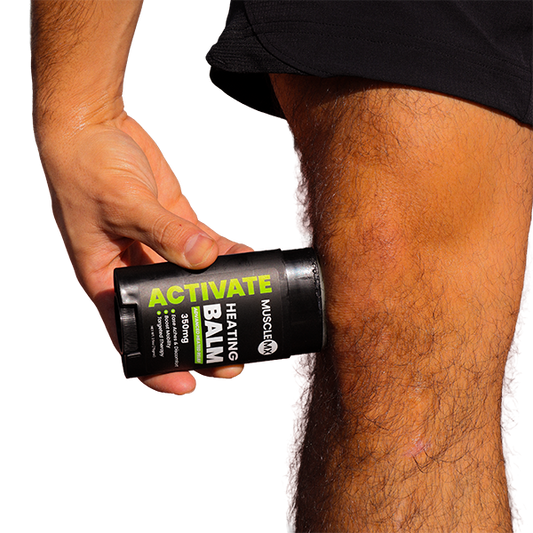
A warming balm for stiff necks, backs and knees. Many people use it while they work through the first few minutes of a warm-up, when everything still feels tight.
2. Add load slowly, not in spikes
The single most common trigger for a soft-tissue injury is a sudden jump in how much you are doing. New season, new class, new PB attempt, first hike of the summer. Tissue adapts on a timescale of weeks, not days, so a sharp spike in volume or intensity leaves capacity trailing behind load.
Practical version: increase weekly training volume by no more than about 10%, and change only one variable at a time. Do not add distance, speed and hill work in the same week. If you have had two weeks off, resume at roughly 70% of where you left off rather than picking up exactly where you stopped. Sore knees on the first big hike of the year are almost always a load-spike story, which is why knee soreness after hiking is so predictable and so preventable.
3. Get strong in lengthened positions
Muscles usually tear while lengthening under load: the hamstring at the end of a sprint stride, the calf on a downhill step. Training that specific ability is called eccentric strength work, and it is the highest-yield item on this list. In pooled trials, eccentric training was associated with roughly a 54% lower injury risk, and prevention programmes including the Nordic hamstring exercise have been reported to halve hamstring injury rates. Worth noting for honesty: a 2021 methodological reappraisal argued that effect size is less certain than the headline suggests. The direction of benefit is consistent even if the exact number is not settled.
Three movements cover most of it: Nordic curls or slow eccentric leg curls for hamstrings, slow eccentric calf raises off a step for Achilles and calf, and split squats through a full range for hips and knees. Two sets of six, twice a week, lowering over a count of three. That is it.
4. Train balance and landing mechanics
Neuromuscular training, which means balance, hopping, cutting and controlled landings, produces some of the largest reductions in injury rate in the literature, and the effect is consistently stronger in women. It works because most sprains happen in the fraction of a second when the foot lands badly and the nervous system has to react. You can rehearse that reaction.
Add three minutes: single-leg balance for 30 seconds each side with eyes closed, ten controlled single-leg landings per side, and ten lateral hops sticking each landing. Ankle programmes built this way cut ankle injuries by around 38%. If your range of motion is already limited, start with the balance work before adding hops.
5. Protect your sleep
Fatigue changes movement quality before you notice it. Reaction time slows, landing mechanics deteriorate, and the protective reflexes that keep a joint in a safe position arrive late. Multiple sports-medicine reviews link short sleep with higher injury rates in athletes, and it is one of the few risk factors you can change tonight.
Aim for seven to nine hours, keep the schedule consistent across weekends, and treat a badly slept night as a reason to lower intensity rather than push through it. Sleep is also when most tissue repair happens, so it does double duty. Our roundup of daily recovery habits covers how to build this into a routine that sticks.
6. Stop training through niggles
Most tendon injuries and muscle tears send a warning first: a tightness that shows up at the same point in every session, a dull ache that fades once you are warm, a spot you keep having to stretch out. Training through that signal is how a two-week annoyance becomes a three-month problem.
Use a simple rule. Discomfort that disappears as you warm up and does not worsen the next day is usually fine to work around. Discomfort that gets worse during the session, or that is worse the following morning, means reduce load now. Swap the session, do not skip it: cycle instead of run, upper body instead of lower. Note that the old RICE protocol has been superseded by PEACE and LOVE, which emphasises early gentle loading over prolonged rest. Complete rest weakens tissue.

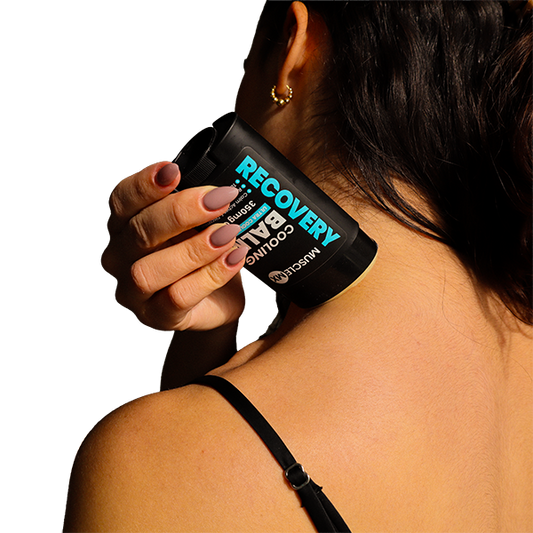
Cooling comfort for overworked muscles and joints after a long day. Available in 350 mg standard and 1000 mg extra strength.
7. Do the boring 15 minutes consistently
Here is the uncomfortable finding: the programmes that work in trials are not exotic. They are short, mixed sessions of warm-up, strength, balance, plyometrics and agility, and interventions lasting under 20 minutes outperformed longer ones. The variable that decides whether they work in real life is adherence. Squads that complete the programme two or more times a week see the reductions. Squads that do it occasionally do not. That adherence gap is, in miniature, the whole case for building a longer healthspan instead of just hoping for a longer lifespan.
So build the smallest version you will actually repeat. Five minutes of progressive warm-up, five minutes of eccentric strength, three minutes of balance and landings, twice a week, attached to sessions you already do. Ritual beats intensity here, which is the practical version of how prevention differs from treatment. Applying a topical while you run through it is a surprisingly effective habit anchor, which is part of why the same routine tends to survive longer than a standalone programme.

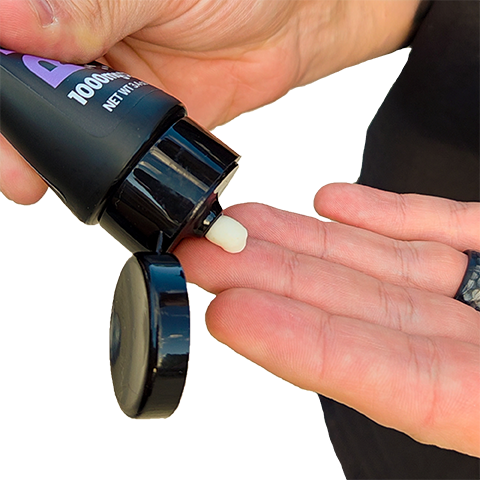
A 4-in-1 lotion that hydrates, repairs and protects. Easy to keep by the door as the cue for your daily 15 minutes.
What works best, side by side
| Habit | Reported effect on injury risk | Time per week |
|---|---|---|
| Eccentric strength work | Up to 54% lower; around 50% for hamstrings | 20 min |
| Neuromuscular / balance training | Among the largest effects reported; ankles down 38% | 10 min |
| Full multicomponent programme | Total injuries down about 35% | 30 to 40 min |
| Gradual load progression | Removes the most common single trigger | 0 min, planning only |
| Warm-up alone | Small on its own, important as part of a programme | 50 to 75 min |
Frequently asked questions
Are soft-tissue injuries really preventable?
Largely, yes. Randomised trials of structured exercise programmes report roughly a 35% reduction in total injuries, with larger reductions for specific injuries like hamstring strains and ankle sprains. That is a substantial share, not all of them. Contact injuries and genuine accidents will still happen, which is why the honest claim is "mostly preventable" rather than "eliminated".
How long does a soft-tissue injury take to heal?
A mild grade 1 strain or sprain typically settles in one to three weeks. Grade 2 injuries usually take three to six weeks. Grade 3 tears can take three months or longer and may need surgical assessment. Tendon problems are the slowest, often needing eight to twelve weeks of progressive loading. Return to full activity should be guided by capacity, not the calendar.
Does static stretching prevent injuries?
Not on its own, and long static holds immediately before explosive activity can briefly reduce force output. Stretching is useful for maintaining range of motion, so keep it, but do it after training or in a separate session. Before training, use dynamic movement instead.
Should I use heat or ice to prevent injury?
Neither prevents injury by itself. Heat is generally used before activity to help stiff tissue feel more mobile, and cooling is generally used after activity for comfort. Our guides on heat or ice for knee pain break down which to reach for and when.
Do these habits still work if I am over 40?
Yes, and the case for them gets stronger. Tendons become stiffer and less tolerant of sudden load with age, so gradual progression and eccentric strength work matter more, not less. The programmes in the research span a wide age range, including recreational and masters athletes.
What if I already have an injury?
Get it assessed if pain is severe, if you cannot bear weight, or if you heard or felt a pop. Otherwise begin gentle, pain-limited movement early rather than resting completely, and rebuild capacity before returning to full load. Do not use this article as a substitute for advice from a physician or physical therapist.
Build the routine you will actually keep
Warm up with Activate, cool down with Recovery, keep Restore by the door. The Heating and Cooling Bundle pairs the two balms for less than buying them separately.
Shop the Bundle from $59 →Free shipping on qualifying orders. Third-party tested. Made in the USA.
This article is for general education and is not medical advice. Muscle MX topical products are cosmetic products intended to support comfort and are not intended to diagnose, treat, cure or prevent any disease or injury. Speak with a qualified healthcare professional about any injury or persistent pain.