Heat Before You Move: 5 Things Science Says Warming Your Muscles Does
Warming your muscles before you move makes them faster, more pliable and better coordinated, and the effect is measurable. A systematic review and meta-analysis from Edith Cowan University found that for every 1°C rise in muscle temperature, performance improved by roughly 3.5%, with the biggest gains in speed and power rather than maximum strength. Warm tissue contracts and relaxes more quickly, nerve signals travel faster, blood vessels open wider, and stiff tissue gives instead of resisting. That is why five minutes of heat and easy movement beats walking straight into your first hard rep, your first hill, or your first serve.
In this article
- 1. Warm muscles contract faster and produce more power
- 2. Heat makes stiff tissue pliable
- 3. Nerve signals travel faster when you are warm
- 4. Blood vessels open and oxygen delivery climbs
- 5. You are less likely to feel a cold start tweak
- Active warm-up vs passive heat vs static stretching
- How long should you warm up?
- Frequently asked questions
1. Warm muscles contract faster and produce more power
Muscle is a chemical engine, and chemistry runs faster when it is warm. Inside a muscle fibre, contraction depends on proteins pulling past each other, and those proteins behave like temperature sensors. Warm them and they respond more quickly to the signal to fire.
Research from Osaka University showed that skeletal muscle is more sensitive to temperature increases than cardiac muscle, and that heating can rapidly activate the contractile proteins inside skeletal muscle. Put simply, a warm muscle turns intent into force sooner. The Edith Cowan meta-analysis puts a number on it: about 3.5% better rate-dependent performance per degree Celsius. Notice what improves. Not your one-rep max, but how fast you get to force. Sprinting, jumping, changing direction, swinging a club or racket, catching yourself on uneven ground. All of it is rate dependent.

2. Heat makes stiff tissue pliable
Cold connective tissue behaves like cold rubber. It resists, then it gives all at once. Warm connective tissue stretches under load and returns without complaint. That is the difference you feel between a first squat at 6am and your fourth one.
This matters most in the places that stiffen overnight or over a long day at a desk: the hips, the hamstrings, the calves, the thoracic spine, the shoulders. Adding warmth before you ask those areas for range is what lets the movement happen at the joint rather than at the end of a tight tissue. If poor flexibility is already limiting your everyday movement, heat is the cheapest place to start.
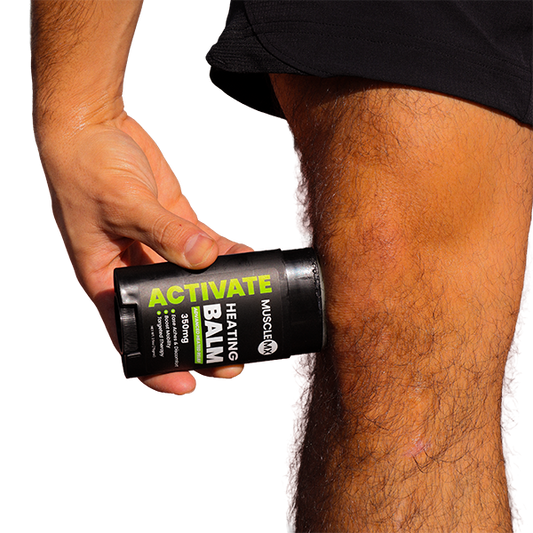
This is where a topical warming balm earns its place in a gym bag. Rubbing a warming balm into the target area creates a localised heat sensation and the massage itself brings blood to the surface, which is a useful head start before the hips or shoulders have to work.

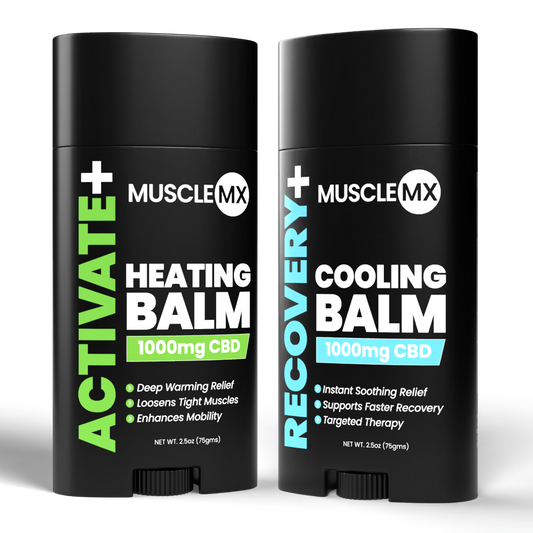
A warming CBD balm built for the 10 minutes before you move. Camphor, caffeine and menthol create a deep heating sensation on stiff necks, backs, knees and shoulders. No-mess stick application, so you can apply it and go.
3. Nerve signals travel faster when you are warm
Warming up does not only change the muscle. It changes the wiring. Higher tissue temperature improves nerve conduction velocity in both the peripheral and central nervous systems, so the gap between deciding to move and actually moving narrows.
The practical result is coordination. Your first few reps or first minute of play feel clumsy when you are cold because the timing between muscle groups is slightly off. That is also when most people get caught out, and it is a large part of why a cold start gets misread as simply getting older. It is worth knowing which aging myths the evidence actually contradicts before you accept that explanation. A warm nervous system fires in the right order, which is a large and underrated part of why warm-ups reduce awkward, off-balance moments.
4. Blood vessels open and oxygen delivery climbs
Heat is a vasodilator. Apply it, and blood vessels in the area widen and let more blood through, which means more oxygen arriving at the muscle that is about to need it. Stanford Medicine puts it plainly: heat before a workout warms cold tendons, joints and inelastic muscle, opens the vessels, and lets an athlete get up to speed more quickly.
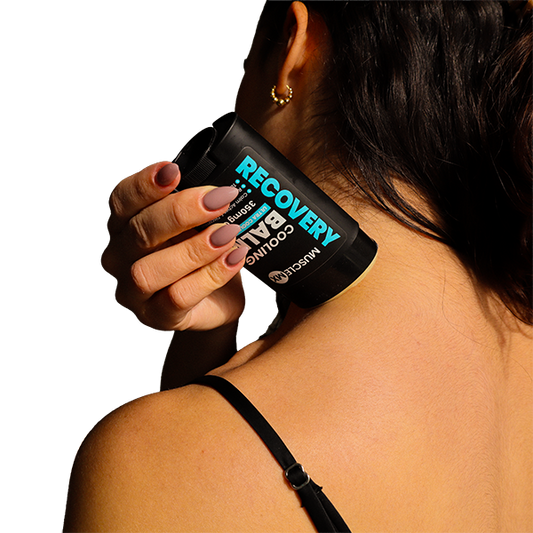
The reverse is also true, and it is the most common mistake people make. Cold constricts blood vessels. Icing a tight muscle before you train sends less blood to the exact tissue that is about to work hardest. Save the cold for afterwards.
5. You are less likely to feel a cold start tweak
Strains happen at the edges: end of range, maximum speed, unexpected load. Every effect above pushes those edges further out. More pliable tissue tolerates a longer stretch. Faster nerve conduction means better timing. Better blood flow means the tissue is fuelled for the work.
Sports medicine practice has long paired pre-activity heat with an active warm-up for people prone to muscle strains, precisely because warm tissue tolerates load better than cold tissue does. If your problem area is a knee, an achilles, a lower back or a shoulder that always complains for the first ten minutes, that is the area to warm deliberately rather than hope will loosen up on its own. Warming that spot every session is one of seven daily habits that prevent pain rather than treat it.
Active warm-up vs passive heat vs static stretching
All three get called "warming up". They are not the same thing, and one of them can work against you.
| Method | What it does | Best used | Watch out for |
|---|---|---|---|
|
Active warm-up (easy cardio, dynamic drills) |
Raises muscle and core temperature, primes the nervous system, rehearses the movement | Always. This is the foundation | Going too hard and arriving fatigued |
|
Passive heat (warming balm, heat pack, hot shower) |
Raises tissue temperature and blood flow with no energy cost, and targets one specific area | Before or alongside the active warm-up, on your stiffest spot | It is a supplement, not a replacement for moving |
|
Static stretching (long holds) |
Increases tolerated range, but temporarily reduces force and power output | After training, or in a separate mobility session | Long holds right before power work blunt performance |
One more detail worth knowing: research on passive heat maintenance shows that the benefit of a warm-up fades if you sit around afterwards. Muscle temperature drops during the gap between finishing a warm-up and starting, and keeping the area warm through that gap protects the performance you just built. If you warm up and then queue for a squat rack for ten minutes, you have lost some of it. The same principle applies across the whole day, which is why we map out what to do morning, afternoon and night.
How long should you warm up?
Five to fifteen minutes covers almost everyone. A workable sequence:
- Minute 0. Apply a warming balm to the area that always feels stiff. Neck, lower back, knees, hips, shoulders. Give it a short massage as you apply. Muscle MX balms typically begin to take effect within 10 to 15 minutes, so doing this first means it is working while you do everything else.
- Minutes 1 to 5. Easy general movement. Walk, bike, row or skip. Aim for slightly warm and slightly out of breath, not tired.
- Minutes 5 to 10. Dynamic drills through full range. Leg swings, hip circles, arm circles, bodyweight squats, walking lunges, thoracic rotations.
- Minutes 10 to 15. Rehearse the actual thing. Light sets of the first lift, easy strides, gentle rallies. Build to intensity rather than jumping to it.
- Then start. Keep moving in any gaps. Don't cool down before you begin.
Cold morning or cold gym? Add a few minutes and expect the first block to feel stiffer. Temperature is the variable you are managing, so a cold environment simply means more input is needed.
Frequently asked questions
Should you use heat before a workout or ice?
Heat before, ice after. Heat widens blood vessels and warms stiff tissue so it is ready to work. Cold constricts blood vessels, which reduces blood flow to muscles that are about to need more of it. Ice is most useful immediately after intense exercise, when the goal is calming things down rather than getting ready to move.
Does a warming balm actually raise muscle temperature?
A topical warming balm creates a strong heat sensation in the skin and the tissue just beneath it, and the massage involved in applying it brings blood to the area. It is a genuine passive warming input for a specific spot, which is why it pairs so well with a general active warm-up. It does not raise whole-body core temperature the way five minutes on a bike does, so use both.
How long before exercise should I apply a warming balm?
About 10 to 15 minutes ahead. That is when Muscle MX balms typically begin to take effect, so applying at the start of your warm-up means the heat sensation builds while you move through your drills.
Is stretching the same as warming up?
No. Warming up raises tissue temperature and prepares the nervous system. Static stretching lengthens tissue and, when held for long periods immediately before power or speed work, temporarily reduces force output. Use dynamic movement before training and save long holds for afterwards.
What if I have no time to warm up?
Do a shorter version rather than none. Two minutes of brisk general movement plus one warm set of your first exercise captures a good share of the benefit. Applying a warming balm to your stiffest area as you walk into the gym costs you about fifteen seconds.
Can I use a warming balm and a cooling balm on the same day?
Yes, and that is exactly how most people use them. Warming balm before you move, cooling balm afterwards when the goal shifts from readiness to comfort. Just apply them to clean, dry skin and don't layer them on the same spot at the same time.
Give your muscles a head start
Activate Heated Balm delivers targeted warmth to stiff necks, backs, knees and shoulders in the minutes before you move. All natural ingredients, batch tested with no detectable THC, and a no-mess stick you can keep in your gym bag.
Shop Activate Heated Balm →30 day money back guarantee · Free shipping available · Rated 4.9 from 566 reviews
Sources: Edith Cowan University, warm-up and muscle temperature meta-analysis; Stanford Medicine on heat before exercise and ice after.
These statements have not been evaluated by the Food and Drug Administration. This product is not intended to diagnose, treat, cure, or prevent any disease.